On Invisibility, Materials, and the Reframing of Shame
This manifesto began privately—as a way to unlearn shame and name what I hadn’t yet dared to speak: that my process, my pace, and my preferences are not failings. They are forms of knowledge. Writing this is not just for the viewer, though I hope it offers context. It’s a reckoning with myself, a reframing of what I once saw as limitations.
I make work from the margins—psychological, physical, aesthetic. My art exists in a tension: between documentary and narrative, form and fracture, visibility and erasure. That tension is not aesthetic flourish. It is lived experience.
I am autistic—low-support-needs and largely invisible. That invisibility permeates everything. It’s in how I move through public space, how I process sensory input, how I work. It’s also in how I’ve been told what counts as real making.
For years, I absorbed the art world’s unspoken rules: that digital work is lesser. That real texture must be manual. That legitimacy requires certain tools, certain gestures, a visible “struggle” that performs labor in accepted ways. I internalized this and turned it against myself. I shamed my process. I silenced my output.
A late diagnosis ruptured that. It forced a re-evaluation. What I once saw as deficits—short working memory, difficulty with improvisational overload—are now part of my method. My aesthetics are shaped not just by taste, but by neurology. My “limitations” are a kind of authorship.
I don’t photograph in manual mode. I pre-calculate settings. I shoot in aperture priority with fast instincts and learned intuitions. My fashion images happen because I build conditions in which I can thrive—automating certain decisions so I can focus on others. This isn’t a lack of skill.
It’s a technique.
It’s adaptation.
It’s a neurodivergent method.
When I use iPhones, toy cameras, or point-and-shoots, it’s not a fallback. It’s radical intent. These tools let me meet the moment. They democratize. They defy hierarchies that punish the disabled, the broke, the unseen. I’ve shot editorial spreads on phones. I’ve made gallery work with plastic lenses. I’ve found beauty in the tools I was told were lesser.
I process digitally. I use Lightroom presets. Sometimes Photoshop. Sometimes even phone apps. This, too, was once a source of shame—because real artists, I thought, suffered analog. But why must labor be visible to be valued? Why must texture be manual to be real?
A mentor once told me he liked my collage work—but that I had to redo it all manually. For texture. For legitimacy. For the look of the hand. That feedback echoed what I had already absorbed from the world. But also from artists I love.
Brian Eno said the limitations of a medium become its hallmark—that we push things to their breaking point, and that’s where innovation lives. Feedback. Grain. Glitch. All celebrated ruptures.
But for disabled artists, the rupture isn’t always aesthetic. It’s foundational. The medium itself can be the breaking point—or the lack of access to it. That, too, can be beautiful. That, too, is authorship.
I photograph liminal spaces and people—those in flux, in-between, on the threshold of one identity or reality and the next. I think it’s because autism often places me in that same liminal state: never fully in, never fully out. Always translating. Always transitioning.
I come from the theatre. I carry with me Peter Brook’s theory of the Rough and the Holy—the idea that performance (and by extension, image-making) can be raw, stripped of polish, and still radiate presence, urgency, even transcendence. I grew up with Antonin Artaud’s screams, Brecht’s distance, Moriyama’s shadows—images and moments torn from the edge of something unspeakable.
The rough is not a compromise. It’s a path. It confronts. It unmasks. It opens the sacred through the broken.
I want my work to feel like that: incomplete, haunted, honest. I want it to be unmastered and unmasterable—accessible, even vulnerable. I believe the art world’s unspoken hierarchy of materials, processes, and polish must be dismantled, or at least complicated—especially when those hierarchies silence disabled and marginalized voices.
This is not just aesthetic. It is philosophical.
My work is deeply postmodern in both ethic and style. I believe in pastiche, appropriation, ambiguity. I take from Barthes the death of the author; from Foucault, the shifting nature of subjectivity; from Deleuze, the idea of becoming.
I believe in ghosts, gaps, and glitches.
I believe in art that resists mastery.
I believe the means of making should be cracked open—not hoarded behind the veil of prestige.
To be disabled and invisible is to be asked constantly to prove one’s reality.
I am done proving.
I am making.
This is not an apology for how I work. It is a declaration.
To those who feel their work is less because of how they must make it: this is your permission. Not to explain. But to assert.
Anyone can cook.
Anyone can create.
The medium is not the message—you are.
On Image-making in the pre-verbal space
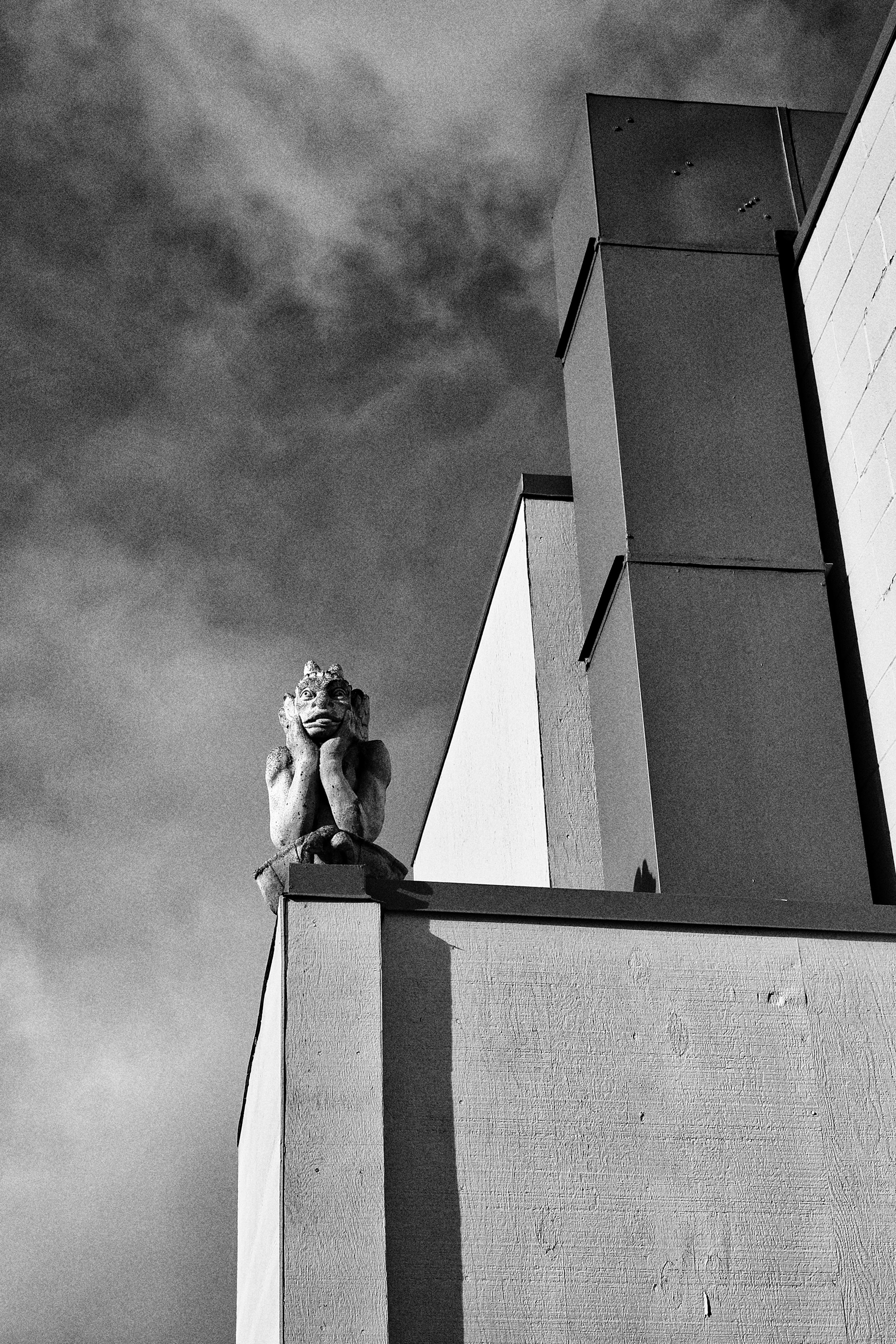
April 15, 2026 - My work as a photographic artist is deeply informed by my early training in experimental theatre, particularly within lineages shaped by Jerzy Grotowski and Augusto Boal. While I did not ultimately find my place as a performer, the methodologies I absorbed—centered on the body, presence, and psychological immediacy—became foundational to how I now approach image-making.
Both Grotowski and Boal rejected spectacle in favor of something more essential. In Grotowski’s “poor theatre,” the actor’s body becomes the primary site of meaning, stripped of excess and illusion. Boal’s work similarly activates the body as a space of lived experience, social tension, and transformation. These approaches privileged process over product, encounter over presentation. That philosophy remains central to my photographic practice.
I approach the camera not as a tool for documentation, but as a space of performance—one in which the body is not posed but revealed. My subjects are not simply seen; they are engaged as presences, often caught in states of transition, tension, or ambiguity. Gesture, posture, and proximity carry more weight than narrative clarity. In this way, the body becomes a primary text—one that resists easy interpretation but invites psychological projection.
I am reminded of a story told to me by Gilles Peress about Henri Cartier-Bresson—or HCB, as he called him—that the act of photography is an attempt to arrive between the thought and the word. That the image exists prior to language, as something more immediate and less resolved. This notion resonates deeply with my own approach. If the photograph can exist in that space—before articulation, before explanation—then it retains a kind of raw psychological charge that resists being reduced to narrative.
Grotowski’s concept of *via negativa*, the act of removing rather than adding, has also shaped my visual language. I am less interested in constructing images than in stripping them down—eliminating what feels unnecessary until only a charged residue remains. This often results in images that feel incomplete or unresolved, resisting closure in favor of something more lingering and indeterminate. Rather than offering answers, the work holds space for contradiction, discomfort, and doubt.
From Boal, I carry an awareness of relational dynamics—the tension between observer and participant, subject and viewer. His collapsing of boundaries between performer and audience informs my interest in intimacy that borders on discomfort. The viewer is not positioned as neutral; they are implicated. There is often a sense of intrusion, of being too close, of witnessing something not entirely meant to be seen. This destabilization is intentional.
Although my path diverged from theatre into photography, I have come to understand that my instincts as an image-maker are rooted in those early embodied practices. Directing, rather than acting, may have been my natural inclination—but even that has translated. I do not direct in a conventional sense; instead, I create conditions in which something can unfold. The photograph becomes less a fixed object and more a trace of an encounter.
In a medium often dominated by polish and spectacle, I remain committed to an anti-spectacular approach—one that prioritizes presence, imperfection, and psychological depth. My images are not designed to resolve, but to linger—to exist in the space between documentation and performance, and—if I am successful—just before language, where meaning remains unstable and the body speaks before it can be fully understood.
On Trans Panic, Pornography and Projection…
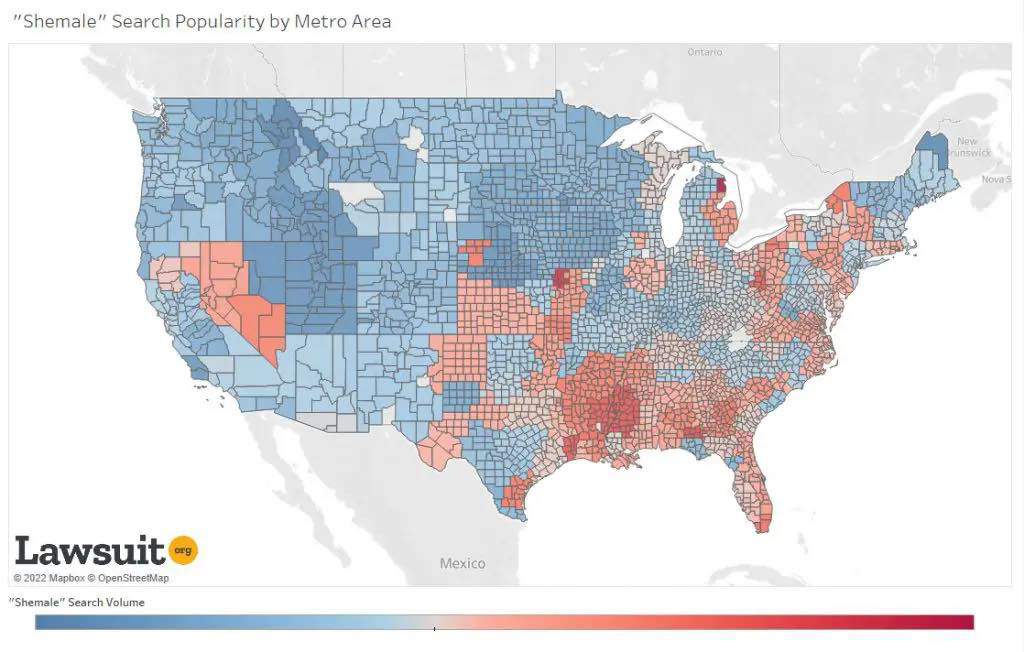
I’ve noticed that some maps and infographics claim that people in the American South consume disproportionately high levels of transgender-themed pornography. Whether or not those exact numbers are precise, it made me think about how this could shape perceptions.
For many conservative, religious Southerners, there may be little to no everyday exposure to transgender people as coworkers, friends, or neighbors—at least not openly. Without those lived relationships, their primary points of reference can end up being highly mediated images: drag performers on TV, or, more often, pornography. In that context, it makes sense that their idea of what it means to be transgender might be distorted.
If your only “knowledge” of transgender people comes through porn—or other entertainment that presents gender identity as performance or spectacle—then your understanding will inevitably be filtered through a sexualized lens. That would explain why so much of the rhetoric from these communities focuses on sexualization, danger, or moral panic: they’re projecting the only framework they have.
But the truth is that transgender people exist across every sphere of life—as parents, teachers, engineers, doctors, artists, neighbors. To see them primarily through pornography isn’t just inaccurate; it reduces their humanity to a sexual stereotype. And ironically, it suggests that the oversexualization isn’t coming from transgender people themselves, but from the cultural filters through which they’re being viewed.
On the Misuse of the Word “Aesthetic”
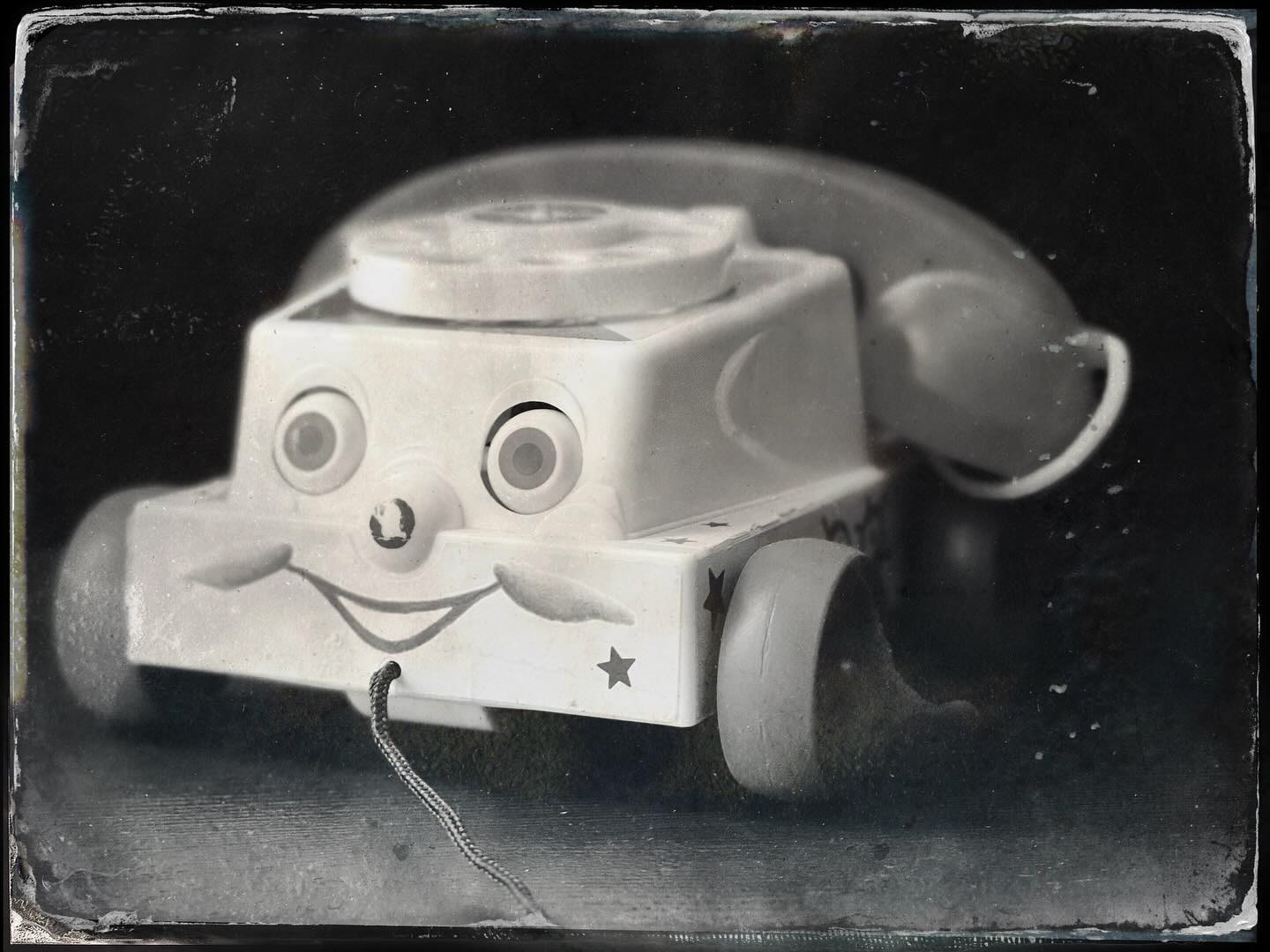
This image shows a vintage Fisher-Price Chatter Telephone — a once-cheerful object that, in this context, takes on a different, more unsettling presence. Its blank gaze, worn paint, and ambiguous expression evoke an aesthetic familiar to anyone who’s seen Skinamarink: childhood filtered through the haze of memory, disquiet, and the uncanny.
And this brings me to a frustration I’ve felt for some time.
More and more, I see people — amateurs, professionals, even arts-related businesses — misusing the word aesthetic. It has become a catch-all for “pleasing to the eye” or “beautiful.” But aesthetic doesn’t mean “pretty.”
Aesthetic refers to the sensory qualities, principles, or style that shape how something looks or feels. It is neutral. An aesthetic can be pleasing, jarring, eerie, banal, or even ugly. The word itself carries no inherent value judgment.
When we flatten aesthetic into just “nice to look at,” we miss out on what makes art, objects, and images rich and complex. We lose the chance to sit with an aesthetic that unsettles or provokes — one that lingers in the mind like the low hum of a forgotten toy at 2AM.
Protect the Dolls — and Protect Us All
I want to uplift the #ProtectTheDolls movement and the vital work being done to defend trans women, especially trans women of color, who are so often on the frontlines of violence and discrimination. These efforts matter deeply.
At the same time, I think it’s important to recognize that anti-trans legislation and hate harm all trans people — including those who don’t fit into certain beauty standards, aren’t part of drag or ballroom culture, or don’t identify as femme. Transmasculine, nonbinary, gender-nonconforming, disabled, fat, and older trans folks are often erased in these conversations, even though they’re also at risk.
Let’s protect the dolls. Let’s protect everyone. Trans liberation means leaving no one behind.